General Principles of Corticosteroid Injections
Which steroid is best?
Particulate - large joints and bursae
Non-particulate - less risk of pain flare
Triamcinolone or methylprednisolone for injections in this course
Injectable corticosteroids can be divided into two categories: particulate and non-particulate. Particulate agents form a local depot within tissues and generally provide longer duration of action. Non-particulate agents are more soluble and less likely to form crystals.
Particulate steroids are favored in large joints and bursae due to longer-lasting effects. Non-particulate steroids result in less crystal precipitation and less risk of post-injection flare. They may be favored for tendon sheath injections and in more superficial structures.
Corticosteroids also vary in potency, equivalent dose, and duration of action.
The selection of a corticosteroid depends on clinician preference, availability, cost, and injection locations. Let’s compare the most frequently used agents: triamcinolone, methylprednisolone, betamethasone, and dexamethasone.
Triamcinolone, available under the brand name Kenalog, is a particulate steroid with an intermediate to long duration. A typical dose into a large joint or bursa is 40 mg and the medication often comes in a 40 mg per milliliter solution.
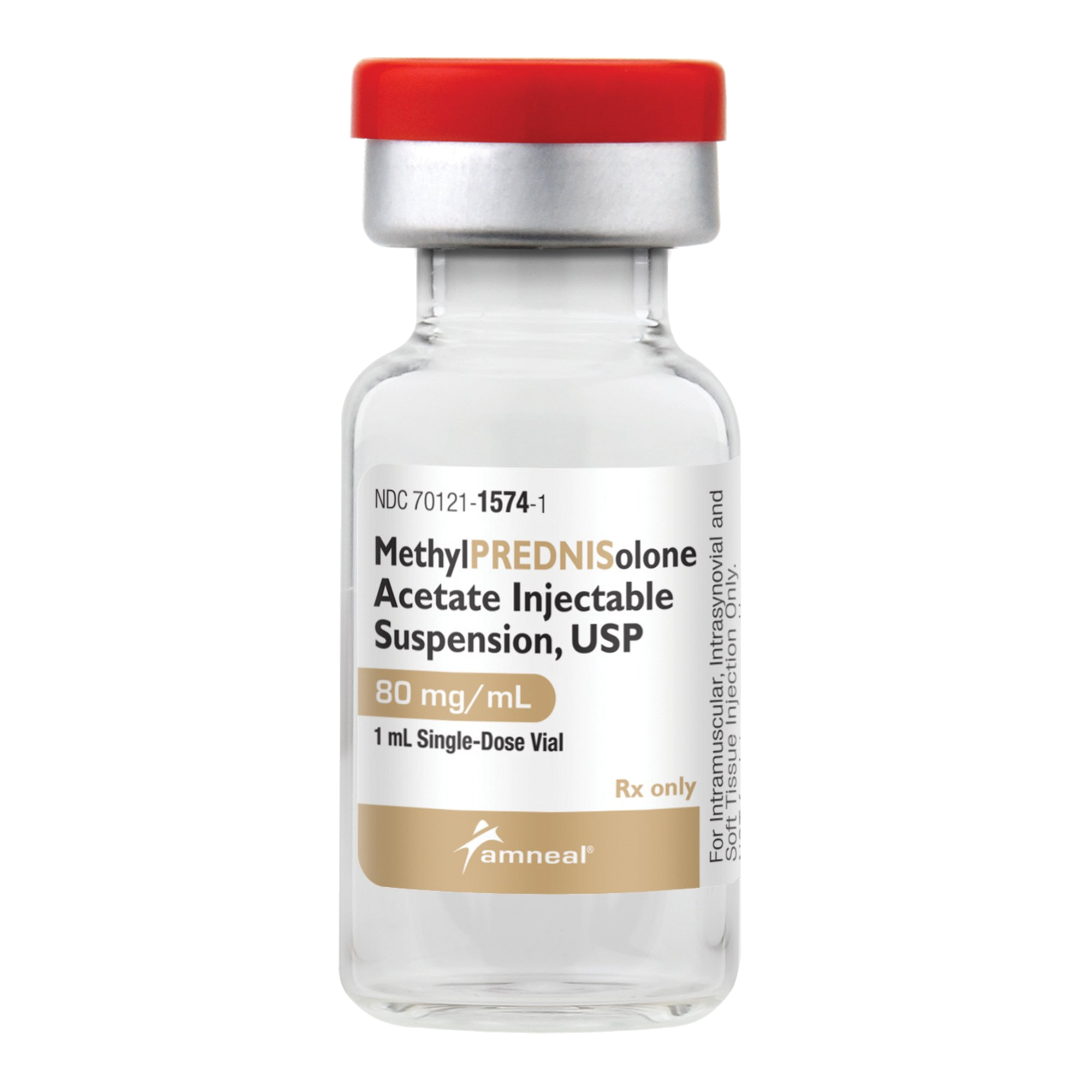
Methylprednisolone, available under the brand name Depo-Medrol, is a particulate steroid similar in potency and duration to triamcinolone.
Betamethasone, available under the brand name Celestone Soluspan, is a mixture of two agents. Betamethasone acetate is a particulate steroid and betamethasone sodium phosphate is more soluble. 3 mg of each agent are combined for a total concentration of 6 mg per milliliter. A typical dose into a large joint or bursa is 6 mg. It has a higher potency than triamcinolone and methylprednisolone. It is also more expensive.
Dexamethasone, available under the brand name Decadron, is a non-particulate steroid. Dexamethasone may provide a somewhat shorter duration of action because it lacks the depot effect of particulate steroids. However, it may be preferred in tendon sheath injections because of less crystal precipitation and less likelihood of local tissue irritation and post-injection flare.
For the injections in this course, it is perfectly reasonable to use the common particulate agents, triamcinolone or methylprednisolone.
Key Takeaways
Particulate steroids may last longer in large joints and bursae
Non-particulate steroids result in less crystal precipitation and less risk of steroid flare
40 mg of either triamcinolone or methylprednisolone can be used for the injections in this course